Scrap Radiator Recycling Plant for Copper and Aluminum Recovery
Scrap radiators contain valuable copper and aluminum that can be recovered and reused in the metal recycling industry. However, separating these metals efficiently can be challenging because radiator structures often contain tightly connected metal components, steel parts, and other impurities.
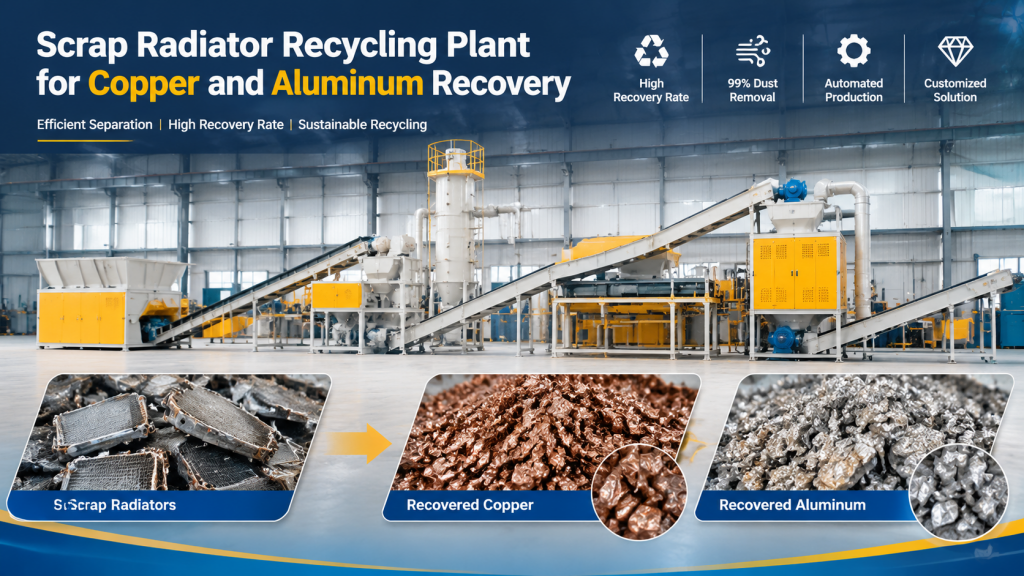
A professional Scrap Radiator Recycling Plant provides an efficient solution for processing waste air conditioner radiators, automotive radiators, water tank radiators, and large radiator blocks. By integrating crushing, material separation, and dust removal, the system helps recover valuable copper and aluminum while improving processing efficiency.
SUNY GROUP provides customized radiator recycling solutions for different raw materials, processing capacities, and factory layouts.
1. What Materials Can a Scrap Radiator Recycling Plant Process?
A Scrap Radiator Recycling Plant is suitable for processing various types of copper-aluminum radiator scrap from air conditioning systems, automobiles, and industrial cooling equipment.
Common raw materials include:
- Air Conditioner Radiators: Waste AC heat exchangers containing copper tubes and aluminum fins.
- Automotive Radiators: Scrap car radiators and other vehicle cooling components.
- Water Tank Radiators: Used radiator assemblies containing copper and aluminum components.
- Large Radiator Blocks: Industrial radiator blocks with copper and aluminum water boxes.
These materials have different structures and dimensions. Therefore, the recycling process and equipment configuration should be selected according to the actual material composition and processing requirements.
2. How Does the Scrap Radiator Recycling Process Work?
The copper and aluminum radiator recycling process combines size reduction, material separation, and dust collection. The complete production line is designed to support continuous operation and efficient metal recovery.
Step 1: Raw Material Feeding
Scrap radiators are collected and fed into the processing system. Before feeding, operators can inspect the materials and remove oversized foreign objects that may affect equipment operation.
Step 2: Crushing and Size Reduction
The radiator materials enter the crushing system, where the connected copper and aluminum components are broken down into smaller pieces.
This process helps release the metal components from the original radiator structure and prepares the materials for subsequent separation.For processing regular copper and aluminum radiators, SUNY GROUP also provides an Aluminum Copper Radiator Cutting Separating Machine for efficient metal separation.
Step 3: Copper and Aluminum Separation
After crushing, the processed materials enter the sorting system. Through the configured separation process, copper and aluminum are separated from each other and from other impurities.
The separation configuration can be adjusted according to radiator types, material conditions, and required output quality.
Step 4: Dust Collection
Dust generated during crushing and material handling is collected by the dust removal system. This helps reduce airborne dust and maintain a cleaner working environment.
Step 5: Final Metal Collection
The recovered copper and aluminum are collected separately for storage, transportation, and further processing. These recycled metals can be supplied to downstream metal processing and manufacturing industries.
3. Main Equipment of the Radiator Recycling Plant
A complete Scrap Radiator Recycling Plant integrates several functional systems to achieve efficient processing.
- Feeding System: Provides a continuous and stable supply of scrap radiator materials.
- Crushing System: Reduces radiator materials into smaller pieces for easier separation.
- Sorting System: Separates copper, aluminum, and other materials.
- Dust Removal System: Collects dust generated during the recycling process.
- Conveying System: Transfers materials between different processing stages.
- Control System: Coordinates equipment operation and supports automated production.
The equipment layout can be customized according to the customer’s factory dimensions, raw material characteristics, and required processing capacity.
4. Scrap Radiator Recycling Plant Technical Specifications
SUNY GROUP offers different models to meet various industrial processing requirements.
| Model | Capacity | Sorting Efficiency | Dust Removal Efficiency | Installed Power |
|---|---|---|---|---|
| RSKSR-1000 | 1,000 kg/h | 97% | 99% | 55 × 2 kW |
| RSKSR-2000 | 2,000 kg/h | 97% | 99% | 75 × 2 kW |
| RSKSR-3000 | 3,000 kg/h | 97% | 99% | 115 × 2 kW |
| RSKSR-5000 | 5,000 kg/h | 97% | 99% | 145 × 2 kW |
Note: The above specifications are based on the standard equipment configurations. Actual processing performance may vary depending on raw material conditions and operating requirements. Please contact SUNY GROUP for a detailed technical proposal.
5. Advantages of a Copper and Aluminum Radiator Recycling Plant
Investing in a professional radiator recycling line can help recycling companies improve metal recovery and operational efficiency.
High Sorting Efficiency
The system is designed to achieve a sorting efficiency of up to 97% under suitable operating conditions. Efficient separation helps recover valuable copper and aluminum from scrap radiators.
High Dust Removal Efficiency
The integrated dust collection system has a specified dust removal efficiency of up to 99%, helping control dust generated during material processing.
Automated Production
The integrated crushing, sorting, conveying, and dust removal systems support continuous and coordinated operation, reducing the need for manual material handling.
Multiple Processing Capacities
With models ranging from 1,000 kg/h to 5,000 kg/h, customers can select equipment according to their daily production targets and investment plans.
Customized Factory Layout
SUNY GROUP engineers can design the equipment arrangement according to the customer’s workshop dimensions, production requirements, and site conditions.
6. Applications of Recovered Copper and Aluminum
Copper and aluminum recovered from scrap radiators are valuable secondary raw materials,Recycling copper and aluminum helps conserve natural resources and supports sustainable material management. Learn more about the environmental and economic benefits of recycling.
- Recovered Copper: Can be supplied to copper smelting, metal refining, and copper product manufacturing industries,For additional information about copper and other non-ferrous metals, visit the Recycled Materials Association’s non-ferrous metals resource.
- Recovered Aluminum: Can be used as secondary aluminum raw material for aluminum processing and manufacturing.
- Recyclable Metal Resources: Help reduce the demand for virgin metal resources and support more efficient material utilization.
The actual quality and commercial value of recovered metals depend on raw material composition, separation performance, and downstream processing requirements.
7. How to Choose the Right Scrap Radiator Recycling Plant?
Before purchasing a copper and aluminum radiator recycling plant, several factors should be considered:
- Raw Material Type: Identify whether the materials are AC radiators, automotive radiators, water tank radiators, or mixed radiator scrap.
- Processing Capacity: Determine the required production capacity, such as 1 ton/h, 2 tons/h, or 5 tons/h.
- Final Product Requirements: Define the expected copper and aluminum separation quality.
- Factory Space: Provide workshop dimensions to help engineers design a suitable production layout.
- Dust Control Requirements: Consider local environmental regulations and the required dust collection configuration.
Providing raw material photos, videos, and capacity requirements will help engineers recommend a more suitable recycling solution.
8. Why Choose SUNY GROUP?
SUNY GROUP specializes in the research, manufacturing, and supply of industrial recycling machinery. We provide customized aluminum and copper recycling solutions for customers in different countries and regions.
For scrap radiator recycling projects, our engineering team can assist with equipment selection, production line configuration, factory layout planning, and technical support.
Whether you need a 1,000 kg/h radiator recycling line or a larger 5,000 kg/h system, SUNY GROUP can recommend an appropriate solution based on your actual production requirements.
9. Get a Customized Scrap Radiator Recycling Solution
Are you planning to recycle waste air conditioner radiators, automotive radiators, or copper-aluminum radiator scrap?
Contact SUNY GROUP to discuss your project requirements. Please provide the following information:
- Raw material type and photos
- Required processing capacity (kg/h or tons/day)
- Expected copper and aluminum recovery requirements
- Factory dimensions and installation location
Our engineers will evaluate your requirements and recommend a suitable Scrap Radiator Recycling Plant for your business.
Contact SUNY GROUP today to get a customized solution and equipment quotation.